
Search California Criminal Records
California criminal history records come from multiple state and county sources. The Department of Justice holds the main criminal record database for all of California. Each of the 58 Superior Courts keeps its own case files as well. You can search these records online, by mail, or at a local courthouse. This guide covers the main agencies, search tools, fees, and laws that apply to criminal history checks in California. Whether you need your own record or want to look up court cases, the key sources are listed below for each county and city across the state.
California Criminal History Quick Facts
California DOJ Criminal Records
The California Department of Justice runs the state criminal record system. It is the main source for criminal history in California. Under Penal Code Section 11105, the DOJ must hold and maintain the statewide criminal record database. The agency handles about 2 million state level background checks each year. It also processes 1.2 million federal level checks. Most electronic fingerprint submissions come back in three business days. Some take up to two weeks. The DOJ is the only agency in California that holds the full state criminal history for each person.
The DOJ background check page shows how the system works and who can request criminal history records in California.
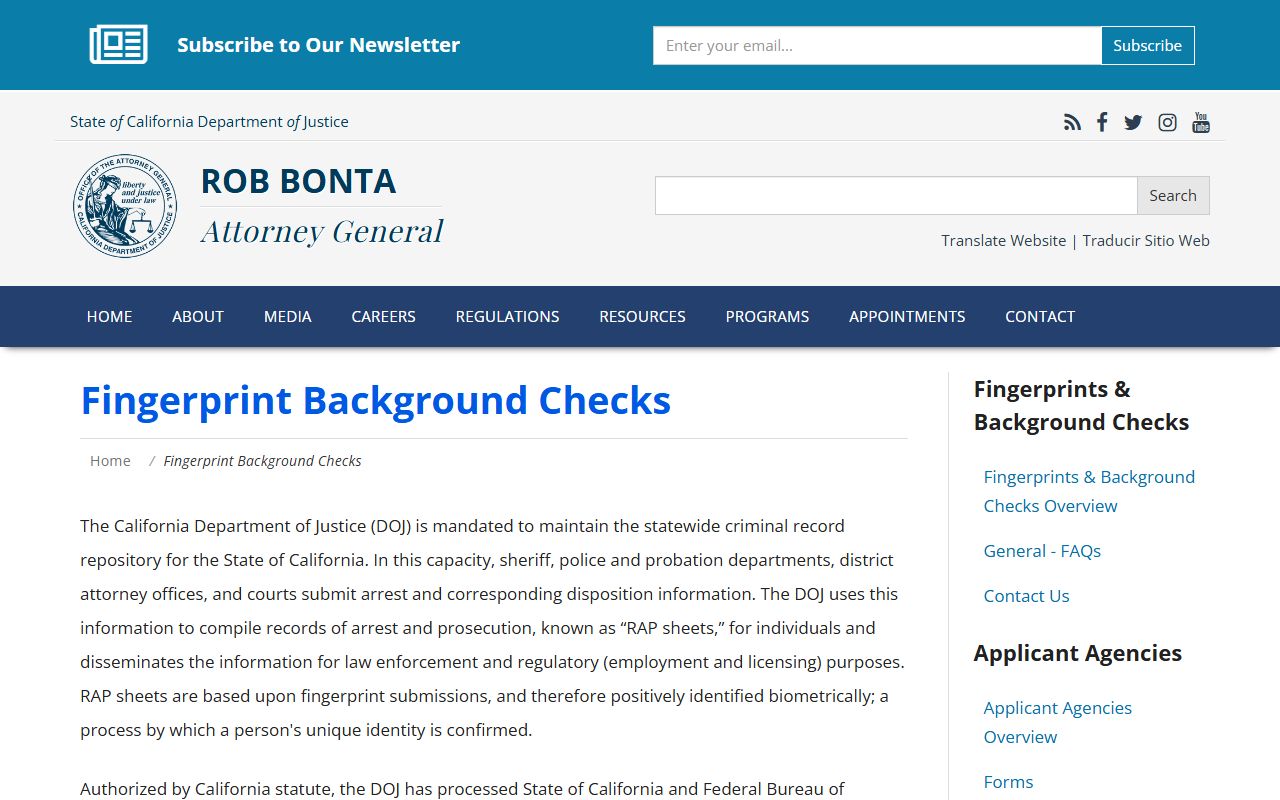
This portal is the starting point for most criminal record requests across the state.
You have the right to get a copy of your own criminal history from the California DOJ. The process is called a record review. Submit your fingerprints and pay a $25 processing fee. California residents use the Live Scan form BCIA 8016RR at any Live Scan site. Out of state residents must mail form BCIA 8705 with a fingerprint card. Send requests to PO Box 160207, Sacramento, CA 95816-0207. The Record Review Unit takes questions at recordreview@doj.ca.gov or by phone at (916) 227-3849. Wait times run from 2 to 3 days for most requests, but some checks take up to 2 weeks. There is no rush option available. Under Penal Code 11142, you can not share your criminal history record with an employer or any third party once you get it from the California DOJ.
The DOJ individual record request page walks through every step for getting your own California criminal history.
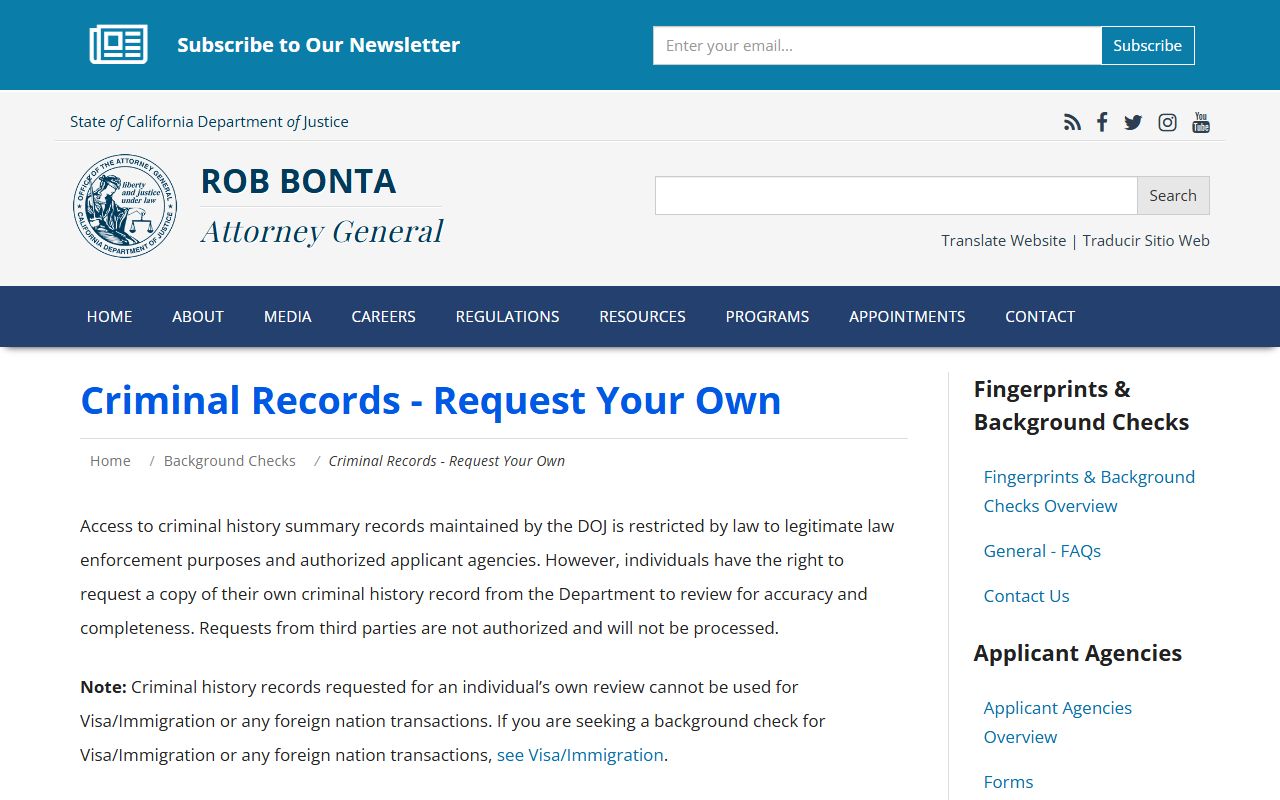
This page covers both in state and out of state criminal history requests from the DOJ.
Note: The DOJ does not offer walk-in service for criminal record requests in California.
Background Checks in California
The first step is to find a Live Scan site near you. These are fingerprint stations located across California. Most police stations, sheriff offices, and private vendors run Live Scan. You fill out the correct form before you go. For a personal record review, that is form BCIA 8016RR. Bring a valid photo ID with you. The operator takes your prints and sends them to the DOJ through a secure network in real time. You pay the $25 DOJ fee at the site plus a rolling fee that the operator charges. Rolling fees range from $20 to $50 depending on where you go in California. Most visits take about 10 to 15 minutes once you are ready.
The DOJ forms page has every form you need for a criminal history check in California.
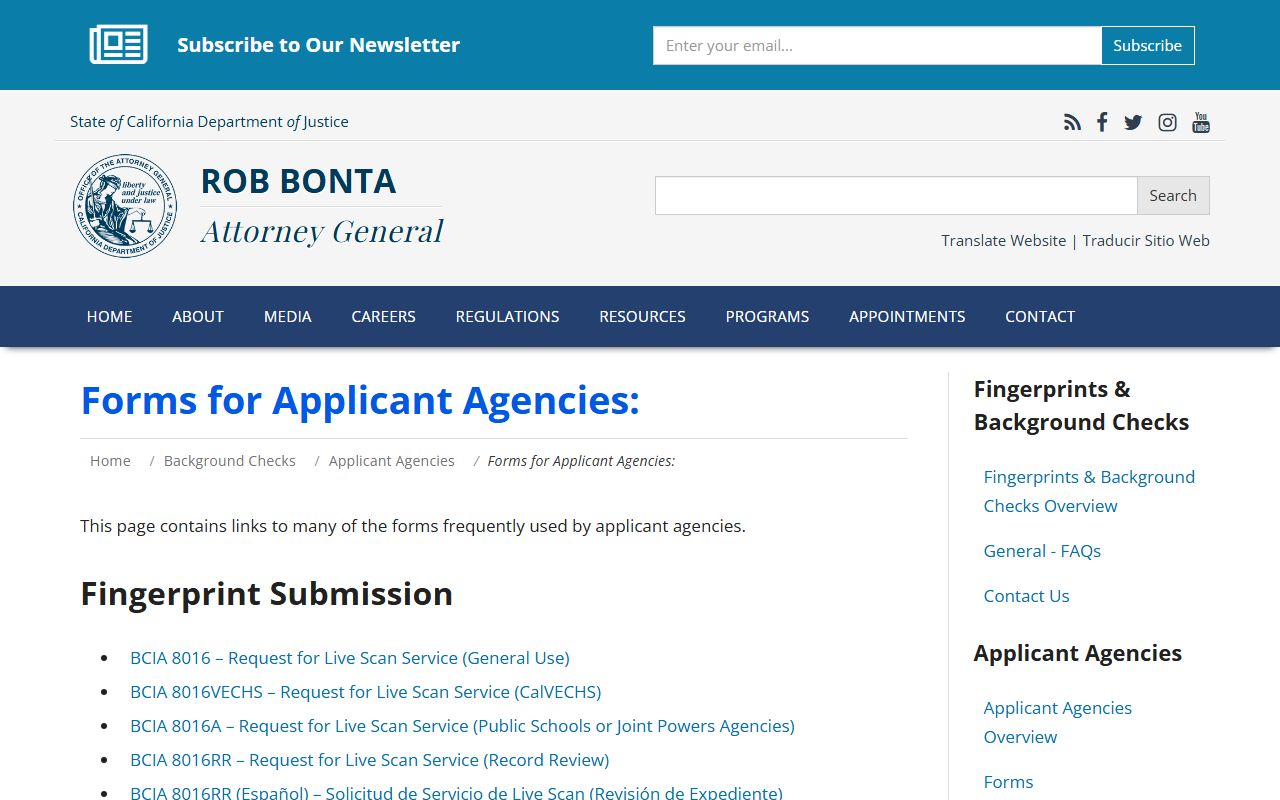
Pick the right form for your request type before heading to a Live Scan site in California.
After the DOJ gets your prints, track your request online. The background check status portal shows where your California criminal history check stands. You need the ATI number from your Live Scan receipt to log in. The site tells you if your check is still in process, done, or on hold. If you have questions about criminal history results in California, call the DOJ at (916) 227-3849. You can also reach them by email at recordreview@doj.ca.gov for help with your request.
The applicant status portal lets you check your California criminal history request in real time.
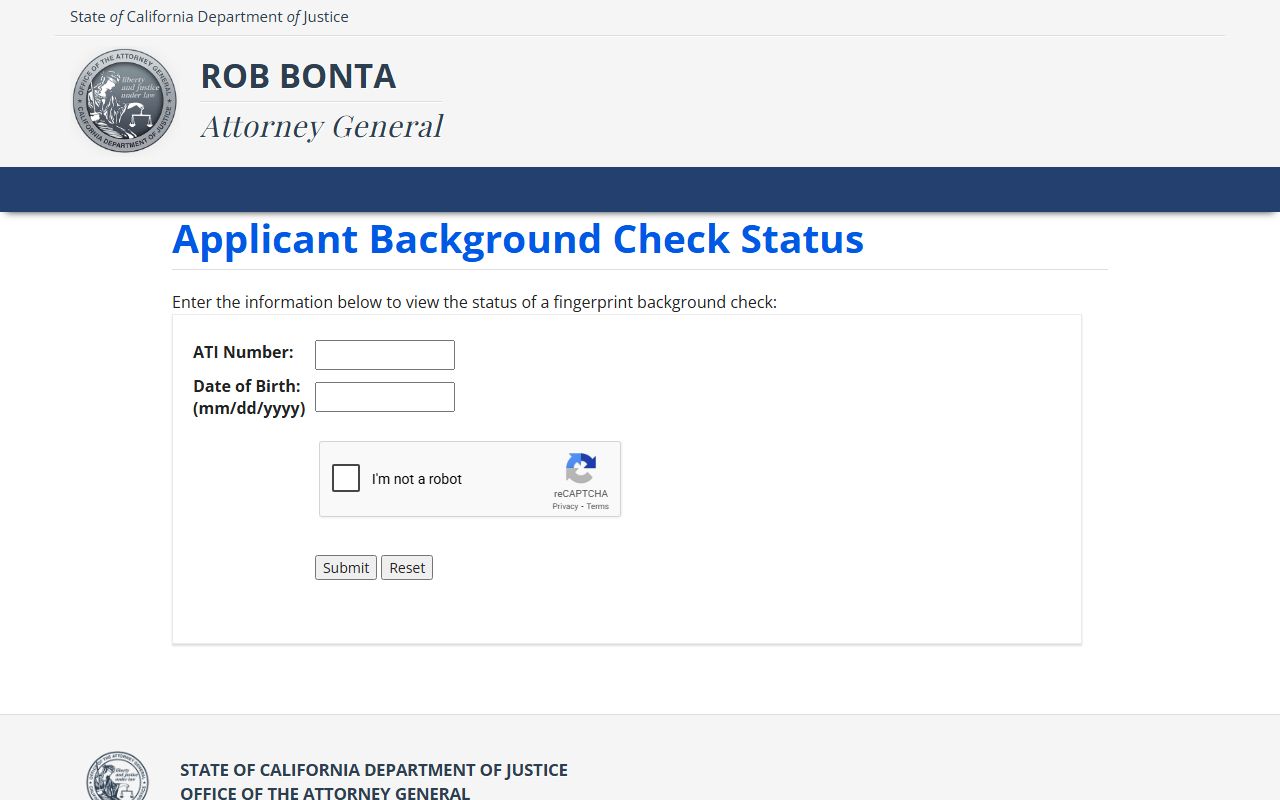
Save your ATI number from the Live Scan receipt. You need it to log in and view your criminal history status.
Live Scan Sites in California
California has hundreds of Live Scan sites spread across all 58 counties. Police stations, UPS stores, community colleges, and private fingerprint shops all run Live Scan for criminal history checks. Each site sets its own hours and rolling fees. The $25 DOJ fee stays the same no matter where you go in California. Call ahead to check hours and ask if you need to set up a time. Some sites are walk-in only. Others take bookings online. Most sites can process your criminal history request in about 10 to 15 minutes once you arrive with your form and ID.
The DOJ Live Scan locations page lists every fingerprint site in California for criminal history checks.
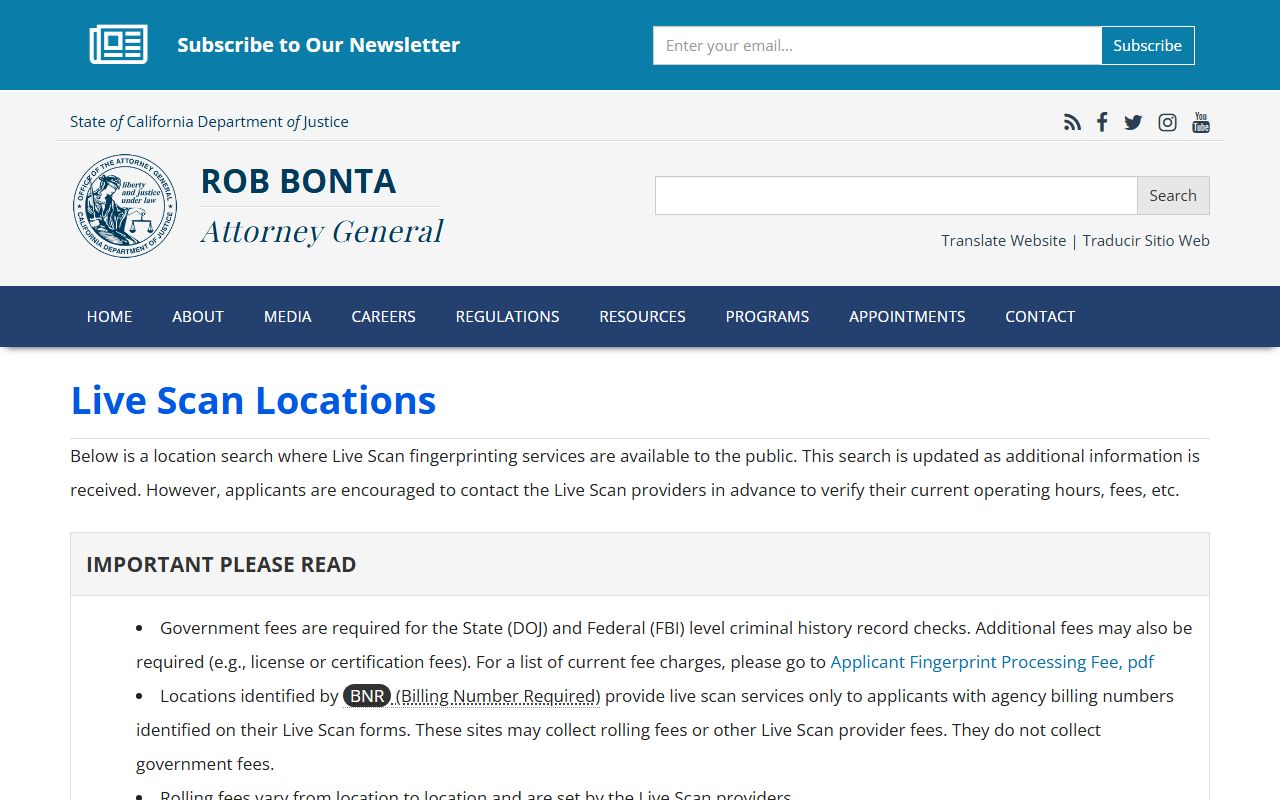
Use this tool to search by city or zip code for the closest Live Scan site near you.
If you run into problems with your criminal history request, the DOJ has a full contact list for each unit. The DOJ contact page breaks down phone numbers and emails by topic area.
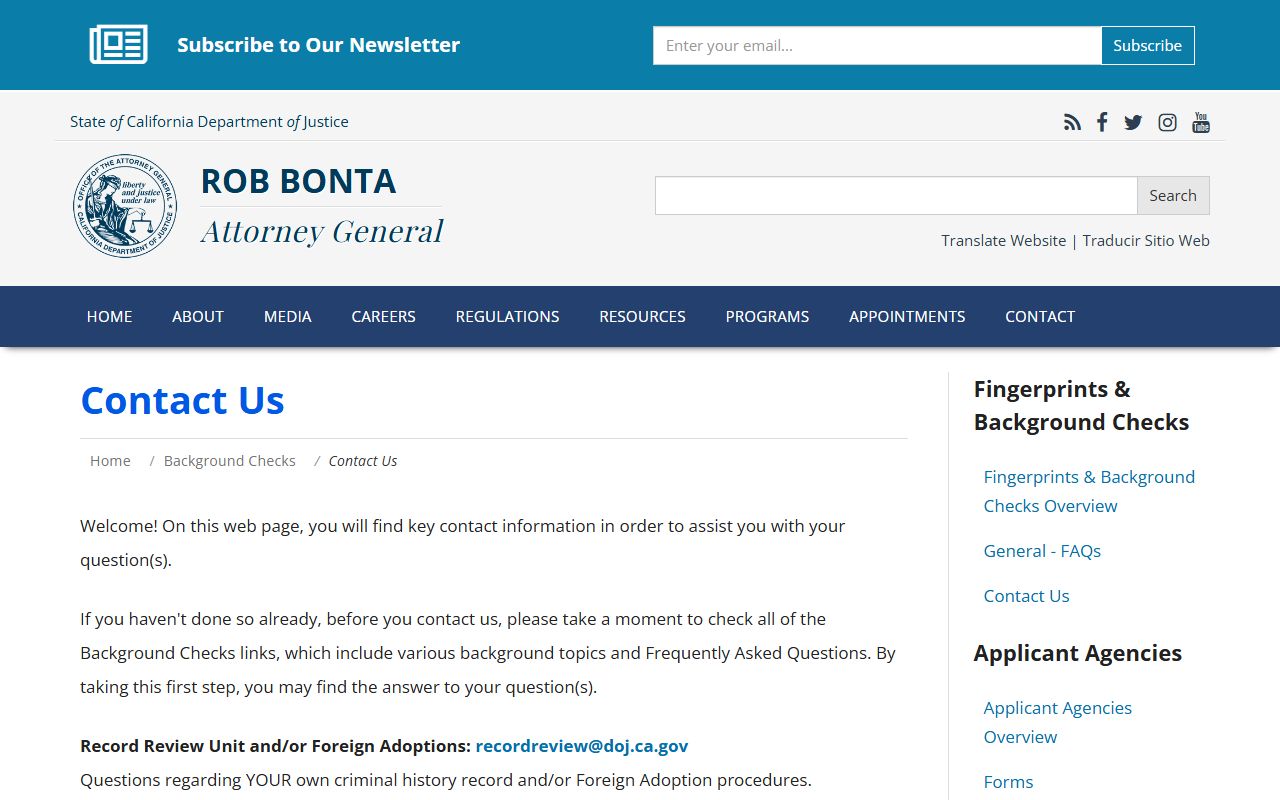
This page has direct lines for the Record Review Unit, status check questions, and general fingerprint help in California.
Note: Live Scan results go straight to the DOJ. You will not get criminal history results at the fingerprint site itself.
Court Criminal Records in California
Every county in California has a Superior Court that keeps its own criminal case files. That is 58 courts total across the state. These records are separate from the DOJ criminal history database. Court records show the full story of a criminal case from start to finish. Charges, hearings, plea deals, trial results, and sentences all go in the file. Most criminal case records are public in California. You can search for them online, visit the courthouse in person, or send a request by mail. Each court charges its own fees for searches and copies. A name search that takes more than 10 minutes costs about $15. Copies run 50 cents per page. Certified copies cost $40 per document at most courts in California.
The California Courts public records page explains how to request criminal case records from any Superior Court.
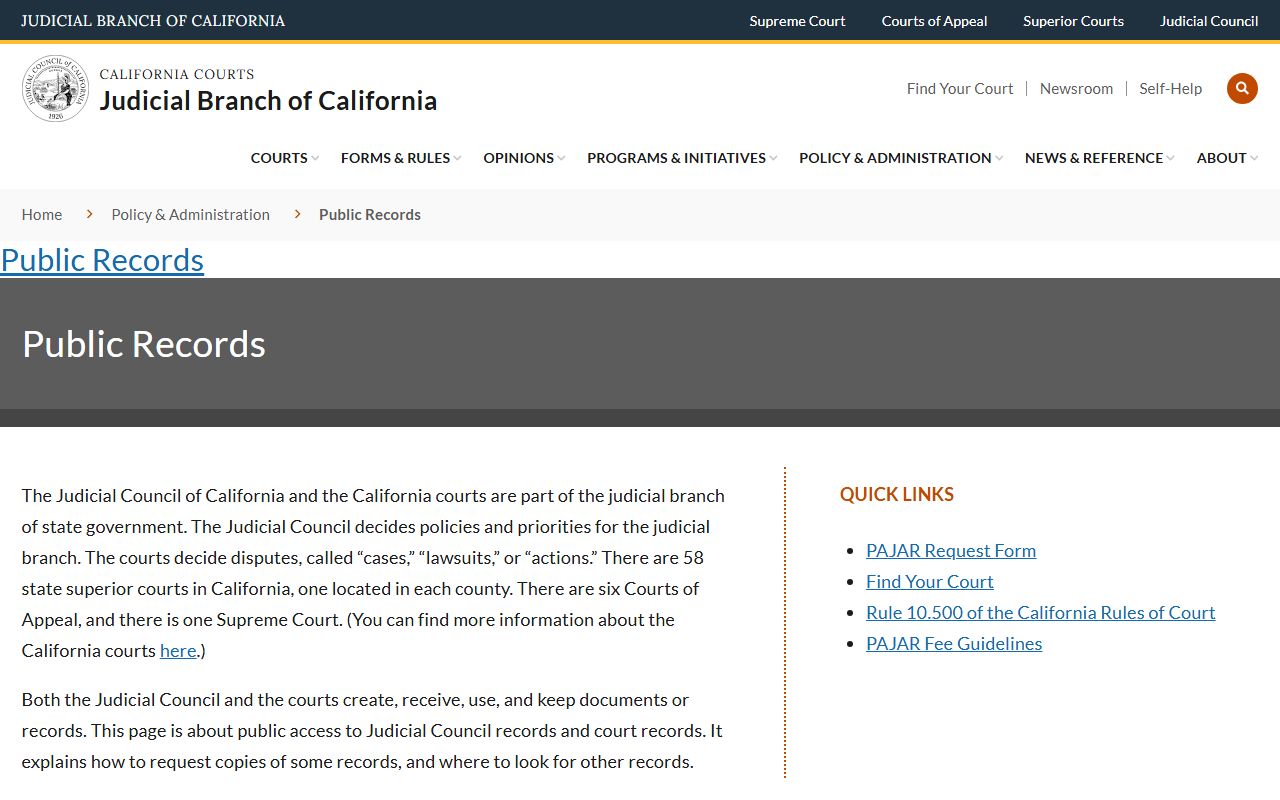
This page covers what types of criminal records you can get and what may be sealed or restricted in California.
Many California courts have online portals where you can search criminal cases for free. Los Angeles, Orange, Sacramento, and San Diego counties all have web based tools for looking up cases. You type in a name or case number and the system pulls up matching criminal records. Some portals show only basic info like case status and next hearing date. Others let you view filings and documents right in the file. What you see depends on the court and how far back their digital records go in California.
Court criminal case files in California typically include:
- Charges and arrest details
- Bail and bond amounts
- Hearing dates and outcomes
- Plea deals and agreements
- Trial verdicts and sentences
- Probation terms
The California court finder helps you locate the right court for any address in the state.
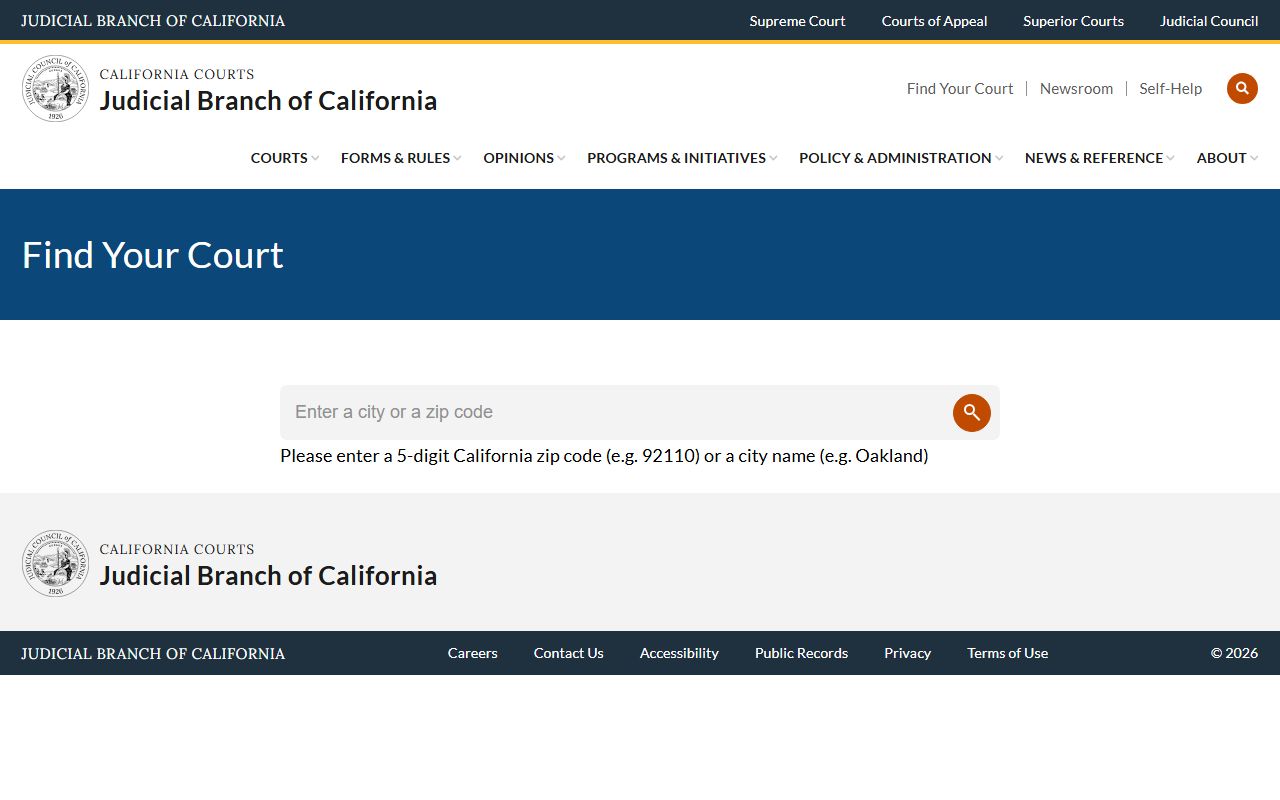
Use this tool to find which Superior Court handles criminal cases in your area of California.
California Inmate Search
The California Department of Corrections and Rehabilitation runs the state prison system. CDCR manages more than 30 prisons across the state. Its online tool is called the California Incarcerated Records and Information Search, or CIRIS. You can look up anyone in state prison right now. Search results show the person's name, CDCR number, age, current facility, and county of commitment. You can also see admission dates and Board of Parole Hearing information. The search is free and open to the public. No account is needed to use it. For questions about prison records in California, call the CDCR Identification Unit at (916) 445-6713.
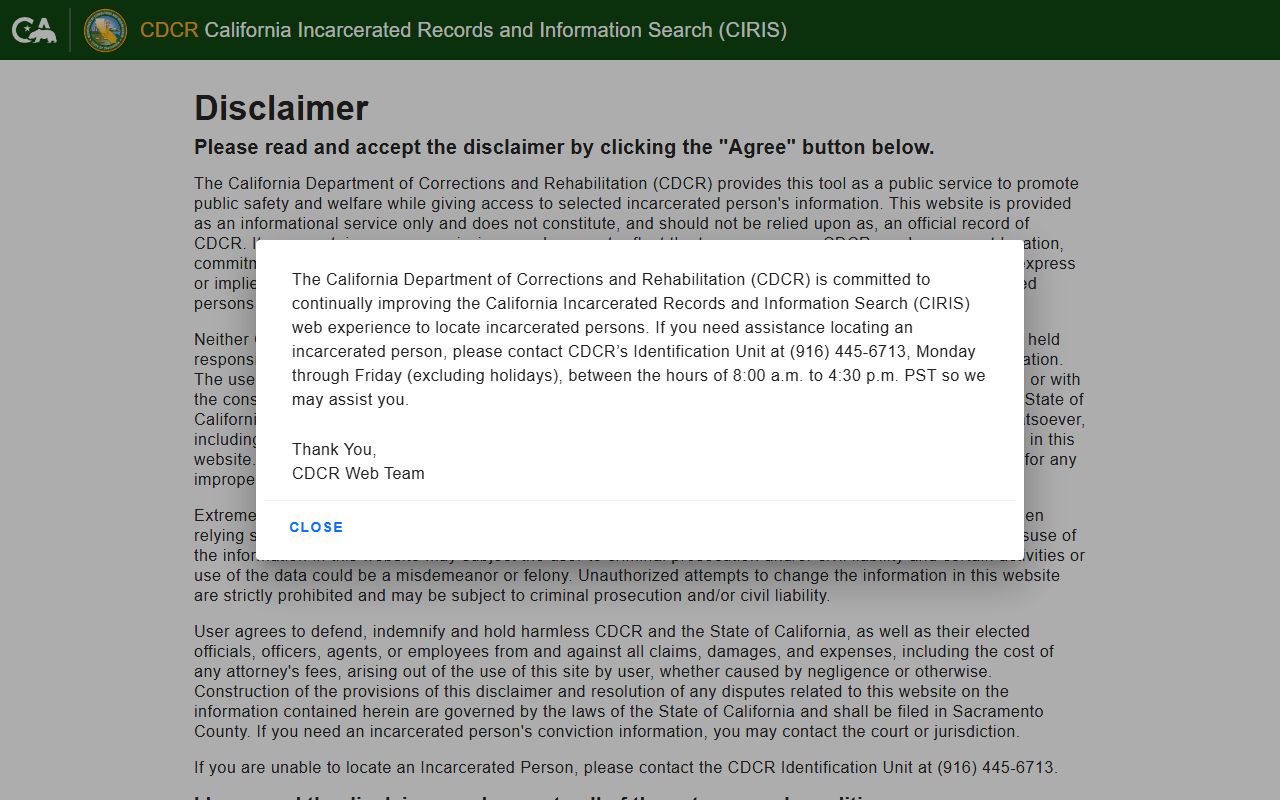
CIRIS covers everyone currently in the California state prison system. It does not show county jail inmates or people on parole.
County jails in California run their own inmate search tools separate from CDCR. Most of the 58 counties have a sheriff website or app where you can look up who is in custody right now. These jail search tools show current bookings, charges, bail amounts, and recent releases. Each county system works a bit different from the next. Some update every few hours while others show changes in real time. Check the county pages on this site for direct links to each local jail inmate search tool across California.
Sex Offender Registry in California
California tracks registered sex offenders through Megan's Law. The state DOJ runs this database under Penal Code Section 290. Anyone convicted of certain sex crimes must register with local law enforcement in California. The public can search the registry by name, address, or area on the Megan's Law website. Results show the offender's photo, address, and offense details. The search is free. It is open to everyone. California uses a three tier system. Tier one offenders register for 10 years. Tier two is 20 years. Tier three means lifetime registration.
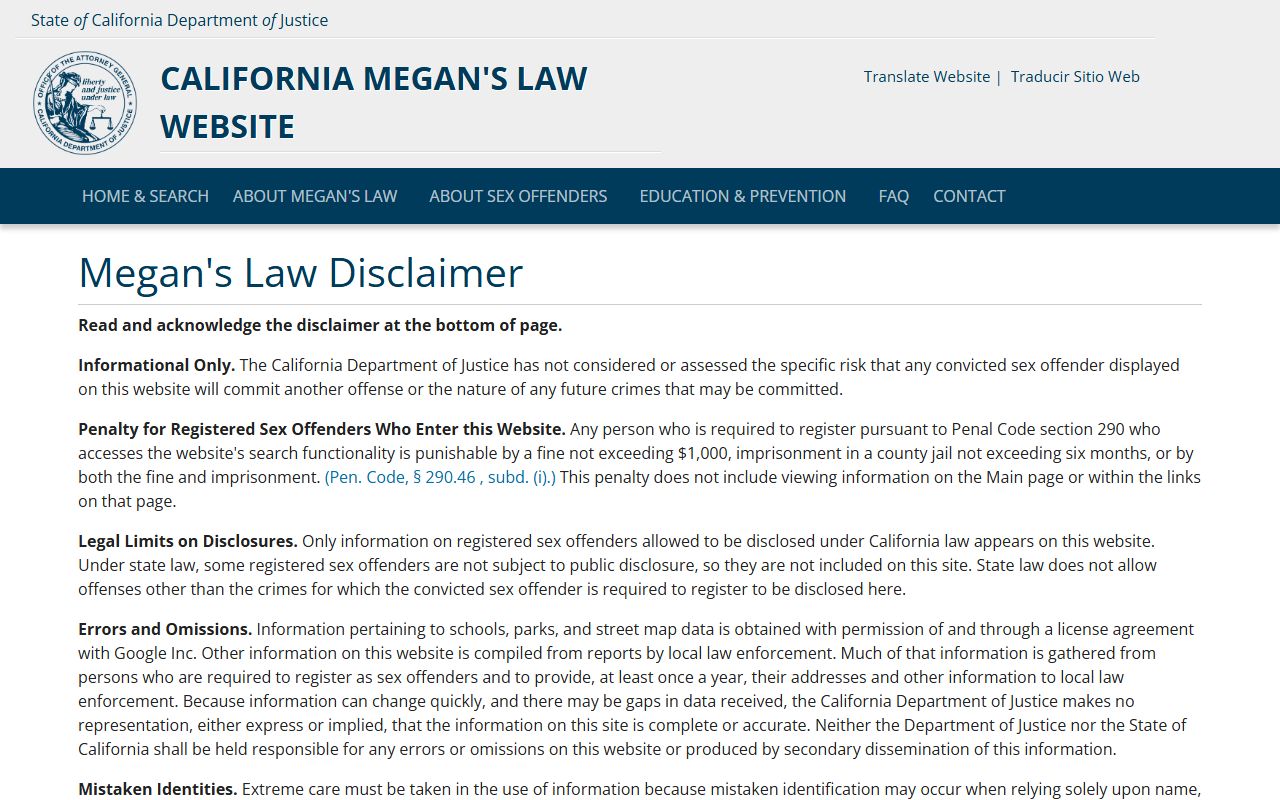
The registry lets you search for registered sex offenders anywhere in California by name or location.
Not all offenders show up on the public site. Some are excluded based on their offense type or a court order. The Megan's Law FAQ page explains what the site does and does not show. It also covers the rules for using information you find there. It is a crime for a registered sex offender to access this site in California. The penalty is a fine up to $1,000, jail time up to six months, or both. The FAQ page answers most questions about how the California sex offender registry works and what to do if you find someone listed near your home or school.
Check the FAQ before using registry results for any purpose in California.
Note: The national sex offender registry at nsopw.gov also covers California and lets you search across all 50 states at once.
Criminal Record Laws in California
California has several laws that control who can see criminal records and how they get used. Penal Code 11105 is the main statute. It spells out who can get criminal history from the DOJ and under what terms. Law enforcement, certain state agencies, and some employers can access these records for specific reasons. The general public can not get someone else's full criminal history from the DOJ. You can only request your own. Court records work differently since those are mostly public and anyone can search them at the courthouse or through online portals in California.
California law gives people several ways to clear or seal their criminal records. Under Penal Code 1203.4, you can ask the court to dismiss a conviction after you finish probation. This is often called expungement in California. It does not erase the record, but it changes the final outcome in the file. AB 1076 made parts of this process automatic starting in 2020. The DOJ now reviews records and grants relief on its own for many eligible offenses. Arrest records can be sealed under Penal Code 851.87 if charges were never filed or the case was later dismissed in California.
Types of criminal record relief in California include:
- Conviction dismissal under PC 1203.4
- Arrest record sealing under PC 851.87
- Automatic relief under AB 1076
- Certificate of Rehabilitation
- Governor's pardon
The DOJ FAQ page covers common questions about criminal history checks, privacy rules, and what you can do with your records in California.
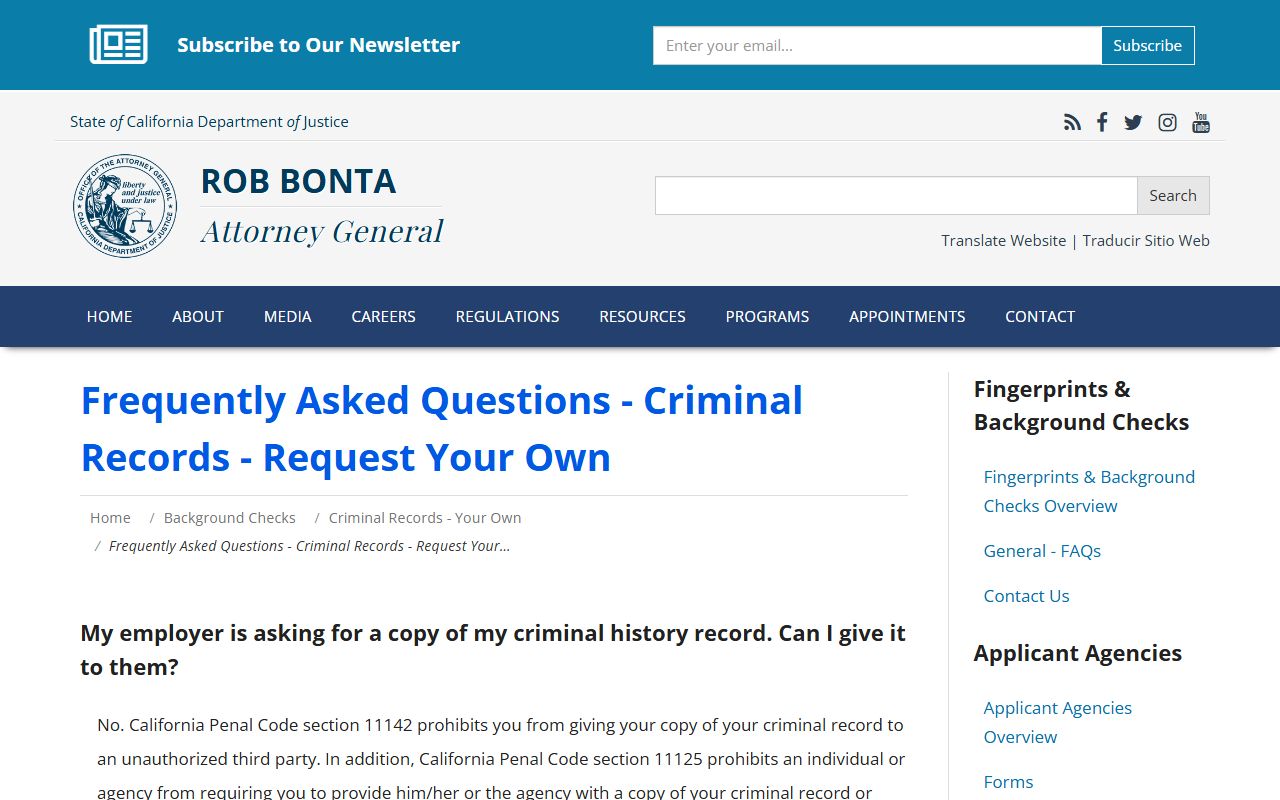
These FAQs answer the most common questions about the criminal history process in California.
Employers in California face limits on how they can use criminal records when hiring. Labor Code 432.7, known as the Ban the Box law, stops employers from asking about criminal history on job applications. They can only run a criminal record check after making a conditional job offer. The law also bars the use of certain records, like arrests that did not lead to a conviction. This is one of the strongest criminal record protections for job seekers in the country. It applies to most private and public employers across all of California.
Note: Many California criminal records are now eligible for automatic relief under AB 1076 without filing any petition.
Browse California Criminal Records by County
Each county in California has its own Superior Court and Sheriff that keep criminal records. Pick a county below to find local search tools and contact info.
Criminal Records in Major California Cities
Residents of major cities can get criminal records from their local police department or county court. Pick a city below to find local criminal history resources.